


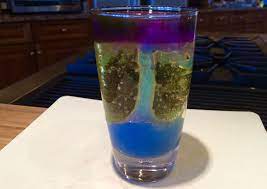
When planning a science experiment for your kids, keep the goal simple. There are many activities that will make the experience fun, and there are even simpler ones that will teach kids about density. One such experiment involves a mystery object in a bag. While this experiment is intended for older children, you can modify it to suit kids of all ages. You’ll need a few basic household ingredients, such as water, food coloring, and sugar.
Fun and Educational Experiments
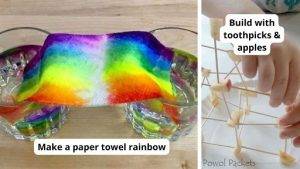
A simple, inexpensive experiment to demonstrate the freezing point of water is a fun way to teach about osmosis. You can make a lava lamp from salt and water, and use a non-washable felt tip pen to draw with. You can even use candy as filter paper. One cool experiment that uses the principle of chain reactions is the Rube Goldberg machine. This experiment shows how water vapour freezes on a can.
Exploring Magnetic Forces and Cloud Formation
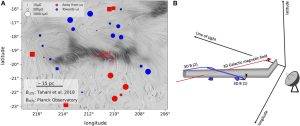
For a slightly more elaborate experiment, try using pipe cleaners that are coated in a magnet. These strips of metal will attract each other and pull them around the box. Then, use your imagination to figure out how this process works with other objects. For example, you could create a cloud with shaving cream and add a few drops of food coloring. This cloud will then release a small amount of water, much like real clouds do when they become too heavy.
Exploring Acid-Base Reactions
Another fun experiment is a baking soda volcano. This classic experiment is a fun way to teach kids about acid and base. They can also see how the two react together in water. When the mixture is added to a soda container, it creates bubbles that carry the raisins upward. The bubbles then burst, releasing carbon dioxide into the air. The raisins lose their buoyancy and sink to the bottom of the glass. These activities are ideal for classrooms, camps, and after school programs.
Another simple experiment involves using a soda pop bottle and a candle. Both items must be poured into a glass jar. Then, the bottles should be allowed to rise and fall in the water. Once the bottles reach the desired height, they should fall and be able to stay in place. A water bottle experiment can also be done with a soda pop bottle. The bubbles should not touch each other, and the kids will learn about density, surface tension, and molecular behavior.
Another fun science experiment for kids is to test the oxidation and reversible reaction of a candle with dirty pennies. Dirty pennies are usually copper and have been in circulation for a long time, which causes them to look tarnished. You can test whether soap or vinegar cleans pennies better. And you can even test whether the pennies are rust-proof when soaked in vinegar. This experiment teaches kids about exothermic and endothermic reactions, so you don’t have to spend any money to do this fun science activity.